


The Future of Clinic Management in India: Trends to Watch in 2026
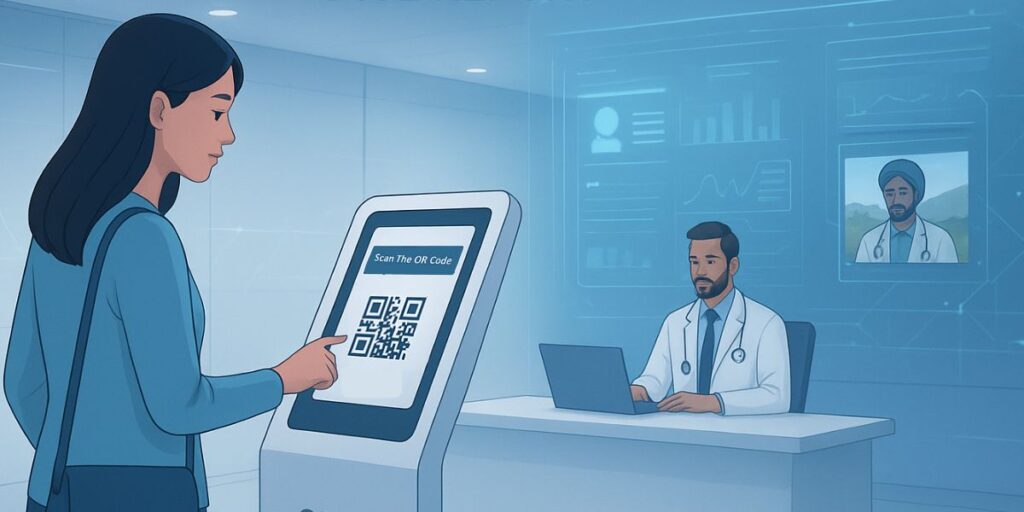
The Indian healthcare sector is evolving at a speed the country has never seen before. With rising digital adoption, government-backed healthcare digitization, increasing patient expectations, and the growth of hybrid care models, clinics across India are entering a transformational decade.
By 2026, clinic management will not look the same. The tools, workflows, patient journeys, and operational methods are shifting rapidly from manual, paper-heavy processes to fully digital, automated, and insight-driven ecosystems.
This deep-dive report examines the key trends shaping the future of clinic management in India by 2026 and what clinics—big and small—must prepare for. The insights here are based on policy direction, technology evolution, healthcare consumer behavior, and adoption patterns across Tier-1, Tier-2, and Tier-3 cities.
1. Rise of Fully Digital Clinics Across India
Over the last five years, India’s healthcare digitization has accelerated, largely driven by initiatives like the Ayushman Bharat Digital Mission (ABDM), growth of telemedicine, and increasing use of clinic management software among small and mid-sized clinics.
Between 2024–2026, the shift from manual operations to digital-first workflows will become mainstream, not optional. Clinics that still use paper registers for appointments, billing, records, and prescriptions will find it harder to remain competitive—and compliant.
Why digital-first clinics will dominate
- Faster patient handling
Digital patient registration, automated queues, and online appointment systems reduce waiting time by 40–60%. This directly improves patient satisfaction. - Better operational efficiency
Digital records eliminate duplication and cut administrative work for staff. Clinics save dozens of hours every week. - Growing comfort with digital healthcare
Patients are increasingly using mobile health apps, WhatsApp reminders, digital prescriptions, and online payments. - Government alignment
ABDM is pushing every clinic to adopt digital record systems and ABHA-linked workflows.
Urban vs Rural Adoption
- Tier-1 & Tier-2 clinics are already adopting EMRs, queue systems, and automation features.
- Tier-3 towns will see the biggest growth between 2025–2026 due to cheaper smartphones, better internet, and simplified healthcare apps.
Digital transformation is no longer a trend—it is becoming the default operating system for clinics.
2. EMR & Digital Health Records Becoming Standard Practice
Electronic Medical Records (EMRs) are replacing handwritten files across India. What was once seen as a “big hospital” requirement is now becoming essential even for single-doctor clinics.
By 2026, digital medical records will be standard because:
1. Clinical documentation is becoming mandatory
With the rise of digital health regulations and medico-legal accountability, maintaining organized, timestamped records is critical. Written paper files are prone to errors, misplacement, and illegibility.
2. Continuity of care matters more than ever
Patients often visit multiple clinics, labs, and specialists. EMRs allow doctors to quickly view:
- medical history
- past medications
- allergies
- previous diagnoses
- lab reports
- imaging
This improves treatment decisions and prevents medical errors.
3. ABDM interoperability
The Indian government is pushing for records to be interoperable. EMRs that can integrate with ABDM and PHR lockers will provide clinics a strategic advantage.
4. Small clinics are adopting faster
Thanks to affordable cloud-based platforms like Orvo, smaller clinics now have access to:
- simplified EMRs
- digital prescription templates
- structured patient data formats
- easy access to patient records
What once required expensive servers can now run on a standard tablet.
By 2026, EMR adoption is expected to grow exponentially—making paper-based clinics outdated.
3. ABHA ID & PHR Integration Will Power Seamless Patient Journeys
The integration of ABHA ID (Ayushman Bharat Health Account) and PHR (Personal Health Records) will redefine the Indian patient journey by 2026.
Why ABHA & PHR matter
- Instant access to medical history
A patient’s past consultations, prescriptions, tests, and allergies can be fetched in seconds. - Seamless sharing across healthcare providers
Patients can share records with specialists without carrying physical files. - Improved clinical decision-making
Doctors can prescribe more accurately with access to longitudinal health data. - Government-led compliance
ABDM is building India’s digital health backbone, and ABHA-linked clinics will be prioritized.
Benefits for doctors
- No dependency on patients to bring old reports
- Faster diagnosis
- Better chronic disease management
- Higher patient trust due to digital transparency
Platforms like Orvo already offer ABDM-ready workflows such as:
- ABHA ID linking
- PHR report uploads
- QR-based patient check-in
- Digital prescriptions synced with ABDM
By 2026, ABHA integration will become a hygiene requirement—not an advantage.
4. AI & Automation Will Handle Up to 40% of Clinic Tasks
Artificial Intelligence (AI) is one of the biggest drivers of automation in India’s healthcare.
By 2026, AI will take over a major portion of repetitive administrative tasks inside clinics, including:
1. Appointment & scheduling automation
AI systems will reduce no-shows by sending:
- smart reminders
- follow-up alerts
- predictive scheduling suggestions
- automated rescheduling
2. Queue management optimization
AI will analyze patient flow patterns and estimate expected waiting time based on:
- doctor speed
- appointment load
- patient type
- historical data
This will reduce chaos and improve patient experience.
3. Billing & revenue workflows
AI-powered billing can automate:
- invoice generation
- revenue leak detection
- payment reminders
- insurance documentation
- discount/staff fraud identification
4. Predictive analytics for decision-making
Clinics will get real-time predictions on:
- peak hour loads
- revenue dips
- staff inefficiencies
- medicine usage
- patient churn
5. Smart clinical insights
AI can also assist doctors with:
- drug interaction alerts
- chronic patient follow-up reminders
- treatment history suggestions
- risk scoring
This does not replace doctors—it makes them more efficient and safer.
5. Teleconsultation Becoming an Integrated Part of Clinic Workflows
Telemedicine is no longer a “pandemic trend.” It has become a permanent part of healthcare, especially in India where accessibility varies hugely between regions.
In 2026, clinics won’t treat teleconsultation as a separate service. It will be integrated directly into the clinic’s core system.
Key reasons for telemedicine’s steady rise
- Convenience for follow-ups
Patients prefer remote consultations for follow-ups, report discussions, and medication adjustments. - Access for rural and semi-urban patients
Telehealth expands reach for specialists and multi-branch clinics. - Hybrid care will dominate
Patients will mix in-clinic visits with online consultations. - Digital prescriptions
Legally compliant e-prescriptions authorized by government guidelines reduce errors and improve traceability.
By 2026 teleconsultation will include:
- integrated video calls from the clinic system
- digital prescription sync
- online payments
- virtual queue
- follow-up reminders automatically scheduled
Clinics that adopt a hybrid model will see higher patient retention and lower operating costs.
6. Patient Experience Will Become a Revenue Driver
Patient experience (PX) is no longer just about polite reception staff. In 2026, PX will become a measurable revenue-driving metric.
Why patient experience matters more now
- Healthcare consumerization
Patients behave like consumers—they compare, review, and choose. Good experience = repeat visits. - Digital convenience is expected
Patients want easy check-ins, online payments, and instant communication. - Reviews impact credibility
Google reviews can influence up to 60% of new patient footfall.
Key PX trends for 2026
- Digital check-ins via QR code
Faster and reduces crowding at reception. - Smart waiting rooms
Live queue status and estimated waiting times displayed on screens or mobile. - WhatsApp-based patient communication
Reminders, reports, and receipts directly delivered to WhatsApp. - Automated review collection
Post-visit review prompts increase a clinic’s online score significantly. - Digital consent forms
Secure, trackable, and accessible.
Patient experience is shifting from a “soft benefit” to a core competitive advantage.
7. Multi-Branch Clinics Will Need Centralised Operating Systems
Multi-branch clinics and healthcare chains are growing rapidly in India due to rising income levels, better brand-building opportunities, and demand for standardized care.
By 2026, multi-branch clinics will need centralised management systems for:
1. Unified patient records across branches
Patients should be able to visit any branch and still have their records accessible instantly.
2. Central billing and financial controls
Owners will need consolidated dashboards to track:
- revenue
- outstanding payments
- doctor earnings
- service usage patterns
3. Standardized workflows
Every branch must follow the same SOPs—from patient registration to prescription formatting.
4. Staff performance monitoring
Central systems allow tracking productivity, hours, and operational adherence.
5. Central inventory management
Multi-branch clinics with pharmacies, labs, or consumables will need cloud-based stock management.
This is where platforms like Orvo operate as an “Operating System” across branches—connecting staff, data, workflows, and analytics into a unified framework.
8. Compliance, Privacy & Data Security Will Become Mandatory
With India’s evolving DPDP Act (Digital Personal Data Protection Act) and ABDM frameworks, clinics will be expected to follow stricter data protection norms by 2026.
Key compliance requirements clinics must prepare for:
- Encrypted digital records
To protect sensitive medical data. - Role-based access
Different staff roles should only access relevant information. - Audit trails
Every change in patient data must be logged. - Consent management
Patients must have control over sharing records. - Secure data storage
Cloud-based systems with backups and disaster recovery will be mandatory.
Clinics using outdated or unsecured systems may face penalties or operational risks.
Platforms like Orvo are already aligned with the DPDP Act and ABDM compliance to protect both clinics and patients.
9. In-Clinic Devices, Smart Kiosks & IoT Will Transform Patient Flow
Hardware-enabled digitization is one of the most under-discussed but high-impact changes coming to Indian clinics.
By 2026, expect more clinics to integrate:
1. Self-check-in kiosks
Patients can register, verify ABHA, or update demographics independently.
2. IoT-enabled vitals capture
Devices that automatically send vitals (BP, SPO2, pulse, temperature) to the EMR.
3. Digital signage systems
Live queue information, token screens, and announcements.
4. Smart printing & automation devices
Seamless prescription or receipt printing connected through cloud.
These hardware integrations will significantly reduce front-desk workload and improve patient flow.
10. Clinic Management Platforms Will Become the “Operating System” for Clinics
By 2026, clinics will no longer use separate systems for:
- appointments
- billing
- EMR
- teleconsultation
- reminders
- inventory
- analytics
- patient engagement
The fragmentation will end. Clinics will shift to all-in-one systems that function exactly like an operating system.
Why this OS model is the future:
- Unified patient journey
Every step—booking, consultation, payment, follow-up—is connected. - Zero redundancy and errors
Data entered once is used everywhere. - Lower costs compared to multiple tools
One integrated solution is more efficient than five disconnected ones. - Powerful analytics
Centralized data enables smart decision-making. - Scalability
Whether a clinic grows from 1 to 10 branches, the system grows with it.
Orvo is built exactly for this future — a connected clinic OS that brings together:
- Digital Prescriptions
- EMR
- ABHA Integration
- Teleconsultation
- Automated Reminders
- Patient Engagement
- Smart Billing
- Queue Management
- Practice Analytics
This is not just software; it’s the future clinic infrastructure.
Conclusion: 2026 Will Be the Year of Adaptive, Data-Driven, Digitally Empowered Clinics
India is entering a golden era of healthcare digitization. Clinic management in 2026 will be shaped by:
- AI-powered automation
- EMR and ABHA adoption
- Hybrid care
- Smart patient experience
- Multi-branch centralization
- Strong compliance
- IoT device integration
- All-in-one OS platforms like Orvo
Clinics that adapt early will experience:
- Higher patient retention
- Lower operational cost
- Better clinical quality
- Stronger branding
- Faster expansion
Those who delay will struggle to keep pace with new regulations, patient expectations, and competition.
For smooth healthcare, there’s only one thing you need.
Download Orvo
Scan the code to download the app on your phone.

iOS

Android